
The railway industry operates in some of the most demanding environments. Railway tracks, coaches, bridges, machinery, and structural components are constantly exposed to factors like moisture, changing weather conditions, dust, chemicals, and heavy usage. Over time, these elements can cause corrosion, surface damage, and reduced equipment life.
This is why protective coatings in the railway industry play an important role in maintaining durability, safety, and performance.To achieve high-quality protective coatings, industries rely on advanced painting equipment such as airless spray systems, which provide uniform coverage and efficient application. Pilot India, through its professional Airless spray solutions, offers equipment designed for industrial coating applications where precision and reliability are essential.
Why Protective Coatings Are Important for Railways
Railway infrastructure includes a wide range of metal components, including:
- Railway coaches
- Bridges and structures
- Track-related equipment
- Industrial machinery
- Fabricated metal parts
These components require long-lasting protection because repairing or replacing railway assets can be expensive and time-consuming.
Protective coatings help:
- Prevent corrosion
- Improve surface durability
- Extend equipment lifespan
- Reduce maintenance requirements
- Maintain appearance and performance
A proper coating application ensures railway assets remain reliable even under challenging conditions.
Common Challenges Faced by Railway Components
Railway equipment is exposed to multiple factors that can affect metal surfaces.
1. Corrosion and Rust Formation –
Moisture and humidity can cause oxidation of metal surfaces, leading to rust formation. Without proper protection, corrosion can:
- Weaken structural components
- Reduce service life
- Increase maintenance costs
Protective coatings create a barrier between the metal surface and external elements, helping reduce corrosion-related damage.
2. Weather Exposure –
Railway infrastructure operates outdoors and faces changing weather conditions, including:
- Rain
- Heat
- UV exposure
- Temperature fluctuations
A durable coating system helps surfaces withstand these environmental conditions.
3. Mechanical Wear and Heavy Usage –
Railway components experience continuous movement, vibration, and operational stress. Protective coatings help improve resistance against:
- Surface wear
- Abrasion
- Physical damage
This supports better long-term performance.
Benefits of Protective Coatings in Railway Applications
1. Extends Equipment Life –
One of the biggest advantages of protective coatings is improved durability. By protecting surfaces from corrosion and damage, coatings help railway components last longer and reduce the need for frequent repairs or replacements.
2. Reduces Maintenance Costs –
Regular maintenance of railway infrastructure can be expensive. A strong protective coating system helps reduce:
- Repair frequency
- Downtime
- Surface deterioration
This allows railway operators to maintain assets more efficiently.
3. Improves Safety and Reliability –
Railway safety depends on maintaining infrastructure and equipment in excellent condition. Protective coatings help maintain the integrity of metal surfaces, supporting safer railway operations.
4. Provides Better Surface Protection –
Modern industrial coatings are designed to withstand demanding environments. They provide protection against:
- Corrosion
- Moisture
- Environmental exposure
- Industrial conditions
This makes them suitable for large-scale railway applications.
Role of Airless Spray Systems in Railway Coating Applications
Applying protective coatings evenly is essential for achieving maximum performance. Uneven coating thickness or poor application can reduce the effectiveness of the protective layer. This is where airless paint sprayers become valuable.
Airless spray technology uses high-pressure application to deliver coatings efficiently and uniformly across large surfaces. Benefits include:
- Faster coating application
- Consistent coverage
- Better paint distribution
- Reduced application time
For railway industries working on large structures and components, airless spray systems provide an efficient coating solution.
Why Choose Pilot Airless Spray Systems for Industrial Coatings?
Pilot India offers professional airless spray solutions designed for industrial applications that require reliable and consistent coating performance.
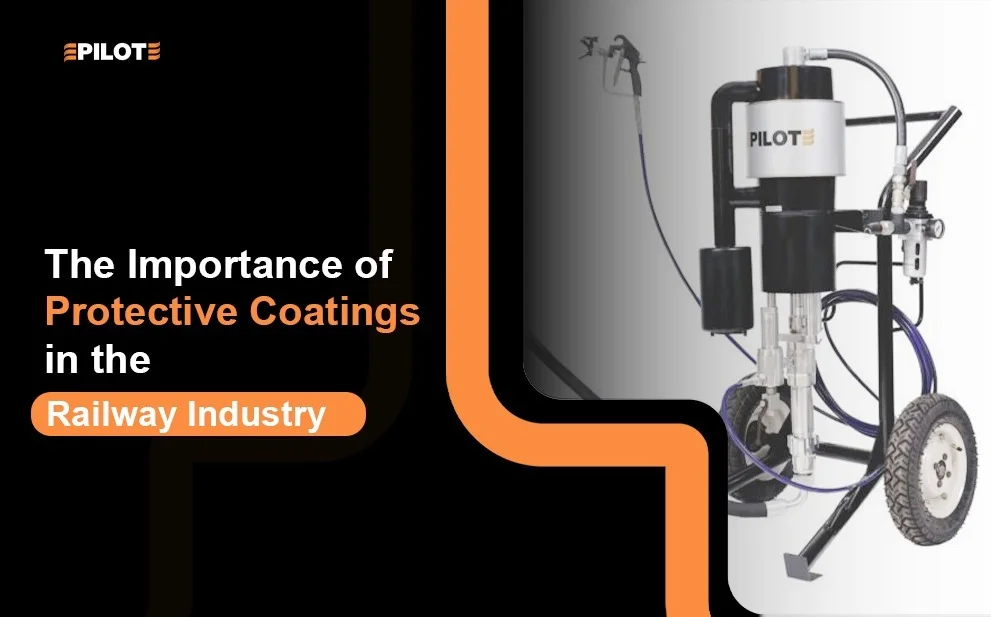
The Pilot Pneumatic Airless Sprayer is suitable for demanding coating requirements where efficiency and precision matter.
Benefits of Pilot Airless systems include:
- High-performance spraying capability
- Suitable for industrial coating applications
- Consistent paint application
- Improved productivity during large projects
Applications of Airless Spray Systems in Railway Coatings
Airless spray equipment is useful for various railway-related coating applications, including:
- Railway Coaches: For applying protective and finishing coatings on train surfaces.
- Railway Structures: For coating bridges, support structures, and fabricated components.
- Industrial Railway Equipment: For machinery and equipment requiring protective finishes.
- Large Metal Surfaces: For achieving uniform coating coverage on extensive areas.
Conclusion
Explore Pilot India’s complete range of industrial solutions, including Airless Spray Systems, Electric Airless Spray, Pneumatic Airless Spray and Electro Hydraulic Airless Sprayers designed for professional performance.
Choose reliable coating technology built for precision, durability, and industrial performance.
Our Popular Industrial Equipments
Spray Gun | Welding Equipment | Power Tools | Office Products
Recent Comments